

 Apple Podcasts
 Spotify
 PocketCasts
 Is Big Necessarily Better? RV Dealership Consolidation is on Roll

What is really happening in the RV dealership world right now, and what does it mean for RV buyers and owners?
We call it The Great RV Dealership Land Grab... Why Bigger isn't Necessarily Better.
In Episode 589 of the RV Podcast News Edition, we breakdown the dealership consolidation wave reshaping the RV industry, from Camping World's financial struggles and leadership shakeup to the rapid expansion of Blue Compass, General RV, and Campers Inn. We explain who is winning, who is hurting, and why bigger is not always better when it comes to service, pricing, inventory, and your overall RV buying experience.
Also in this episode: fuel prices are spiking just as spring travel season begins, national parks are heading into peak season with fewer staff, and a California county may become the first in the state to officially allow full-time RV living on private property.
Join us live for the Spring Prep Workshop on Thursday, March 12 at 7 PM Eastern.
Non-members: $10
RV Community members: Free
Sign up at https://RVPodcast.com/workshop
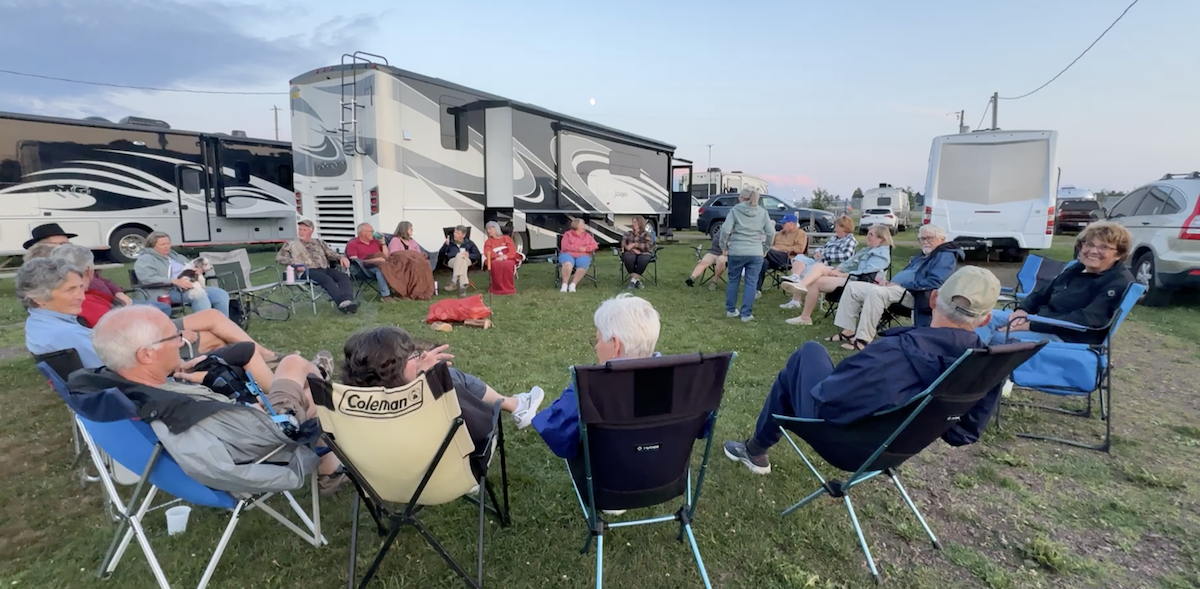
Become a part of the Internet's Best RV Community
Private. Ad Free. No Facebook Nastiness.
RV Travel Tips, Rallies and Meet-Ups, interactive livestreams, exclusive workshops, perks, discounts and Real Help from Real Rvers.
RV PODCAST NEWS EDITION - MONDAY, MARCH 9, 2026
Welcome to the weekly News Edition of the RV Lifestyle Podcast. I’m Mike Wendland, and this is where we dig into the stories that actually matter to you as an RVer.
You know, one of the things I carried with me from more than 40 years in journalism is this: if you are going to tell people something, make sure it is true and make sure you can back it up. That is still how we do it here. Every story on this show is sourced and verified, and you can find the full show notes with all our links at RVPodcast.com. I am proud of that.
And we have got a really good show for you today. We are going to talk about what is really going on with Camping World - and there is a celebrity angle to that story that did not get nearly enough attention. We are heading into national park season with a staffing situation that every RVer needs to know about before they pull out of the driveway. And there is a vote happening in California tomorrow that could be a first for the entire state when it comes to full-time RV living. Good stuff today.
But hey - before we get rolling, I want to mention something that is happening this Thursday night and you are going to want to be there.
March 12th, 7 PM Eastern - I am doing a live Spring Prep Workshop. Just you, me, and everything you need to know to get your rig ready for the season. Systems checks, what to look for after winter storage, the maintenance stuff that people skip and then regret on their first trip out. We are going to cover it all.
Non-members, it is just ten bucks. If you are already part of RVCommunity - it is free, my gift to you. Just head over to RVPodcast.com/workshop to grab your spot. Thursday, March 12th, 7 PM Eastern. I would love to see you there. Again,sign up at RVPodcast.com/workshop Hurry, this workshop is close to reaching capacity. RVPodcast.com/workshop
Okay: Let us get into it.
STORY 1: THE RV DEALERSHIP LAND GRAB - WHO IS WINNING, WHO IS HURTING, AND WHAT IT MEANS FOR YOU
We are going to talk today about something that affects every single one of you who has ever walked into an RV dealership, is thinking about walking into one, or has ever needed warranty service on a rig you already own. And I could not have asked for better timing, because the past few months have handed us a news story that ties the whole picture together perfectly.
Camping World is having a very rough stretch - and I mean that on multiple fronts.
It started in December, when the company announced that Marcus Lemonis - the celebrity CEO, the guy you know from CNBC's The Profit, the face of Camping World for more than two decades - was stepping down effective January 1st. Wall Street did not love that news. The stock dropped 13 percent in December on the announcement alone. Analysts called it the Marcus Lemonis Effect. He had been so identified with the brand, so much of the company's public profile, that investors took his departure as a genuine loss - and they said so with their sell buttons.
Then came the February earnings report, and that sent the stock down another 17 percent. The company reported a wider-than-expected quarterly loss of 73 cents per share, badly missing estimates. The stock, which had traded near $20 just a year ago, is now sitting around $8 near its 52-week low - down roughly 46 percent over the past year. And then came the news that really caught people's attention: Camping World suspended its quarterly dividend for the first time in 10 consecutive years.
Now, I want to be careful here. A falling stock price does not mean a company is going under. And Wall Street's mood does not always reflect what is happening on the ground at your local dealership. But this story is bigger than one earnings call or one CEO departure. What is happening at Camping World is a window into the entire dealership consolidation wave that has been reshaping the RV retail landscape - and what happens when the "bigger is always better" model runs into reality.
So today we are going to walk through the whole picture: how we got here, who the players are, how each of them is doing right now, and what it means for you the next time you walk onto a dealer lot.
THE MARCUS LEMONIS FACTOR
Let me spend just another minute on Lemonis, because I think his departure matters beyond the stock price.
He built Camping World from a regional operation into a $6 billion national giant through relentless acquisition - buying up dealerships across the country for more than 20 years. He took the company public in 2016. He became one of the most recognizable names in the RV industry, and his television fame was genuinely good for business. Every episode of The Profit was free national advertising for a company most Americans had never heard of. Millions of TV viewers knew the Camping World brand because of Marcus Lemonis personally.
He is not completely gone - he stays on as a non-executive co-founder and special advisor, and says he intends to remain a meaningful long-term shareholder. His handpicked successor, Matthew Wagner, is a 19-year Camping World veteran. The transition was described as planned and orderly. Lemonis himself said he did not want to be the founder looking over the new CEO's shoulder.
But here is the reality. The consolidation model that built Camping World is also the model that left it with $1.472 billion in long-term debt, a stock near its lowest point in years, and a service reputation that has frustrated customers for years. Lemonis built something enormous. Whether that something was built to last at this scale is the question now being answered in real time.
THE REST OF THE FIELD
You already know Camping World as the largest player, but three other chains have been moving aggressively, and the picture for each of them is pretty different right now.
Blue Compass RV is the nation's second-largest dealer group. Founded in 2018 by Jon Ferrando, a former AutoNation executive, Blue Compass has grown to over 100 stores in 33 states in just eight years. They made the Inc. 5000 list of fastest-growing private companies in America twice running. In 2025 they posted new RV sales up 17 percent and used sales up over 20 percent. Their CEO held a major leadership summit just weeks ago calling 2025 a tremendous year and laying out an aggressive strategy for 2026. Ferrando has been on Fox Business talking up the company's momentum. On paper, Blue Compass looks like the anti-Camping World right now: growing, privately held so there is no public stock to crater, and led by a guy who literally built AutoNation into the largest auto dealer chain in America before applying the same playbook to RVs. That playbook: acquire, rebrand, scale. Whether it ends better here than it did for Camping World remains to be seen. The customer complaint patterns - months-long service waits, poor communication, warranty disputes - are already familiar.
General RV Center is the one in this group that I have the most respect for, and the reason is simple. Founded in 1962 and now run by Loren Baidas as a third-generation family business, General RV has grown to 23 supercenters nationwide. They sell one out of every 10 motorhomes in the country. They are the largest family-owned RV dealer in America. They have never gone public. They carry no investor pressure to grow at any cost. Baidas has said repeatedly on the record that they do not grow for growth's sake. They just showed up at the Pennsylvania RV Super Show with their largest footprint ever. Sixty-plus years in business, still family-owned, still growing on their own careful terms. There is a lesson somewhere in there.
Campers Inn RV is the newest member of the big-chain tier, and they got there fast. Founded in 1966 by Art and Frances Hirsch - who opened their dealership because a salesperson was too busy playing cards to help a working man in a machinist's uniform - Campers Inn is now in its third generation of Hirsch family ownership. Last November they completed what the industry called one of the largest acquisitions in RV history, buying the bulk of Lazydays RV's assets and jumping to 51 dealership locations across 22 states practically overnight. More new locations are planned for 2026. They are still moving, and the Hirsch family's fingerprints are still all over the operation. That matters.
WHAT THE CAMPING WORLD NUMBERS ACTUALLY MEAN
So why is the biggest chain in the business in such rough shape financially right now? And what does it tell us about the consolidation model itself?
Operating margin deteriorated to negative 4.3 percent, compared to negative 1.3 percent the year before. Free cash flow burn hit $272 million, up from $186 million the prior year. They are burning cash faster than the year before, which is the wrong direction. Total long-term debt stands at $1.472 billion - much of it accumulated through dealership acquisitions over the years. When you grow by buying things, you accumulate debt. When the market softens and margins compress, that debt becomes a weight you carry everywhere.
They are also sitting on inventory they cannot move fast enough. Roughly 18 percent of their new inventory is model year 2025 - last year's units - sitting on lots while 2026 and 2027 models are arriving. To clear that aged inventory they have to cut prices, which squeezes margins further. Management calls it an intentional strategic cleanse. Maybe. But it is also just what happens when you have 200 locations all stocked to the gills and the market cools.
Severe weather in early 2026 temporarily shut down more than 60 Camping World locations, costing an estimated 1,500 unit sales. When you are a family dealer with one location, a bad week of weather is a bad week. When you have 200 locations, a cold snap becomes a balance sheet event. That is the math of scale working against you.
THE PATTERN NOBODY WANTS TO SAY OUT LOUD
The challenges Camping World is facing are not random bad luck. They are, to a significant degree, the predictable consequences of the consolidation model itself.
When you grow to 200 locations through rapid acquisitions, you carry enormous debt. When you have 200 locations stuffed with floor-planned inventory and the market softens, you are exposed in a way a family dealer simply is not. A family dealer can pump the brakes. A 200-location chain has to keep moving iron every month to service the floor plan interest.
And when your whole model is premised on being everywhere for everyone, you end up stretched thin on the thing that matters most after the sale: service. During the COVID supply crunch, industry surveys documented that the bigger dealers got what they needed from manufacturers while the smaller dealers did not. Manufacturers rewarded volume. That accelerated consolidation. But it also helped create a retail environment where the chains got fat and complacent - and now those same chains are staring down inventory piles and balance sheet problems they cannot easily fix.
An industry analyst predicted a few years ago that 60 percent of all RVs sold in North America would eventually be sold by just 10 dealership groups. We are moving in that direction. Whether that is good for RVers is still very much an open question.
WHAT TO DO ABOUT IT
Practical. Here is what to do with all of this.
Research before you buy. Not just Google stars - actual narratives. The BBB complaint profiles, Trustpilot, and the brand-specific owner forums will tell you far more than a four-star average. Look for patterns: months-long service waits, unanswered calls, surprise warranty charges. Where you see those patterns consistently, believe them.
Ask about service before you sign anything. This is the number-one post-purchase pain point across all dealer types right now. What is your average turnaround on warranty work? Who is my point of contact after the sale? What happens if I need service while traveling far from your location?
Pay attention to Camping World's inventory clearance right now. With the company aggressively clearing aged 2025 units, there may be genuine deals available at the moment. Floor traffic is high, sales pressure is high, and they need to move units. If you are in the market, this could be a window. Go in with your eyes open and negotiate hard.
Seek out the family dealer. An independently owned dealership with an owner who walks the lot and answers the service phone is still your best bet for a relationship that survives beyond the day you sign. General RV and Campers Inn are large chains that still have genuine family ownership at the top, and that matters. But if there is a true independent in your region with a strong local reputation, it is worth the longer drive.
Consider the manufacturer factory service center for warranty work. The dealer is not always your best option, especially at a chain location. The factory service center has technicians trained specifically on your model and direct parts access. Before your warranty expires, make the trip.
THE BOTTOM LINE
The RV dealership consolidation wave is not over. Camping World is still buying - management confirmed on their earnings call that another acquisition closes this month. Blue Compass is still expanding. Campers Inn just swallowed Lazydays whole. General RV is at 23 supercenters and growing on its own careful terms.
But what the past few months have shown us - Lemonis out, stock halved, dividend suspended, debt piling up - is that scale is not a guarantee of health. The man who built the largest RV dealership chain in the world just handed over the keys, and the company he built is now fighting through some of the ugliest financial numbers in its public history. A $6 billion company with $1.5 billion in debt and 60 locations shut down by a snowstorm is a very different kind of operation than the family dealer who owns his building outright and answers his own phone on a Tuesday morning.
Bigger is not always better. We keep saying it. The market, these past few months, keeps agreeing.
SOURCES
Marcus Lemonis departure and stock reaction: https://rvbusiness.com/camping-world-announces-leadership-succession-plan/ https://www.chicagobusiness.com/retail/marcus-lemonis-retiring-camping-world https://www.fool.com/investing/2026/01/12/why-camping-world-stock-slumped-by-13-in-december/ https://www.benzinga.com/markets/equities/25/12/49299564/star-of-the-profit-and-the-fixer-marcus-lemonis-exits-as-camping-world-ceo
Camping World Q4 2025 earnings and February stock drop: https://rvbusiness.com/camping-world-releases-q4-earnings-report/ https://markets.financialcontent.com/stocks/article/stockstory-2026-2-25-why-camping-world-cwh-shares-are-plunging-today https://www.fool.com/earnings/call-transcripts/2026/02/26/camping-world-cwh-q4-2025-earnings-transcript/ https://www.dailypolitical.com/2026/03/02/camping-world-q4-earnings-call-highlights.html https://www.investing.com/equities/camping-world-holdings-inc
Blue Compass RV 2025 performance and 2026 strategy: https://rvbusiness.com/blue-compass-rv-ceo-jon-ferrando-im-excited-for-2026/ https://rvbusiness.com/blue-compass-rv-charts-26-path-at-leadership-summit/ https://rvbusiness.com/blue-compass-rv-named-to-2024-inc-5000-annual-list/ https://www.bbb.org/us/fl/fort-lauderdale/profile/recreational-vehicles/blue-compass-rv-0633-90594259/complaints
General RV Center: https://rvbusiness.com/general-rv-center-awarded-fast-50-status-by-crains-detroit/ https://www.rvnews.com/general-rv-reflects-on-2023-growth/ https://rvbusiness.com/general-rv-center-set-for-pennsylvania-rv-super-show/
Campers Inn RV and Lazydays acquisition: https://rvbusiness.com/campers-inn-rv-completes-acquisition-of-lazydays-stores/ https://rv-pro.com/news/campers-inn-rv-completes-lazydays-acquisition-expands-national-footprint/
Industry consolidation trends: https://rv-pro.com/features/dealership-merger-mania-continues/ https://rvbusiness.com/opinion-stagnant-rv-market-will-continue-through-2024/ https://www.rvnews.com/exclusive-dealers-discuss-supply-chain-today/ https://rvbusiness.com/2026-power-breakfast-to-feature-powerful-dealer-panel/
2) FUEL PRICES ARE SPIKING - HERE IS WHAT IT MEANS FOR YOUR RV TRAVEL BUDGET
Alright, let's talk about something that hits every single one of us right in the wallet. Fuel prices. And I have to be honest with you - the timing on this one really stings.
Just as we are all starting to plan our spring and summer trips, prices at the pump are jumping fast. I mean really fast. As of this week, diesel hit four dollars a gallon nationally. That's the highest it has been since April of 2024. And regular unleaded crossed three dollars and eleven cents - jumping eleven cents in a single night, according to AAA. An AAA spokesperson said prices haven't moved this quickly since Russia invaded Ukraine four years ago. That should tell you something.
So what is going on? Well, it is not the usual seasonal stuff, though that is part of it. The big driver right now is the U.S. military strikes on Iran and the threat to shipping through the Strait of Hormuz. That waterway handles about 20 percent of the world's oil supply. You mess with that, and oil markets freak out - even if nothing has actually been physically disrupted yet. GasBuddy analyst Patrick De Haan said it well: risk alone functions as if supply is being restricted. Markets do not wait for confirmation. They price in the fear first.
And here is the part that really matters for those of us towing a rig with a diesel truck. Diesel has jumped even harder than gasoline, because diesel markets are more globally connected to shipping costs. So if you are pulling a fifth wheel or a toy hauler behind a diesel pickup, you are feeling this more than most.
Now, before all of this blew up, the forecasters were already projecting a spring price bump anyway. The annual switch to summer-blend gasoline, plus refinery maintenance season, was going to push prices up regardless. GasBuddy had forecast regular gas peaking in the low $3.20s this spring, with diesel averaging around $3.55 for the full year. Those numbers are already out the window. And one analyst from GasBuddy predicted gas could jump another 30 cents a gallon by the end of this week alone.
How long does this last? Honestly, nobody knows. It depends almost entirely on what happens in the Middle East. The administration is working to stabilize shipping routes, including talk of Navy escorts for tankers through the Strait of Hormuz. If that works and tensions ease, prices could come back down fairly quickly. But right now, markets are betting on this dragging on.
So what does this mean for your spring and summer RV budget? Here is the practical math. If you were planning a 3,000-mile trip and your rig gets 10 miles per gallon on diesel, you are burning 300 gallons. At the $3.55 forecast from a few weeks ago, that was around $1,065 in fuel. At four dollars a gallon, you are now looking at $1,200. Add another 15 cents and you are at $1,245. That is an extra $180 on a single trip - and that is before you account for multiple trips over a full travel season.
My suggestion: pad your fuel budget by at least 15 to 20 percent right now compared to what you had originally planned. Use GasBuddy or Gas Guru to track prices along your route and find the cheapest stops. And if you are heading through Gulf Coast states - think Texas, Louisiana, Mississippi, Alabama - those have historically been the lowest-priced region in the country, so plan your fill-ups accordingly.
Here is the silver lining, if you can call it that. Forecasters do still expect prices to ease in the second half of the year - if the geopolitical situation stabilizes. After June, relief is supposed to come. But between now and then, for spring travel season, budget for the higher numbers. Do not get caught flat-footed at the fuel pump three states from home.
Keep checking the links below. Prices are moving daily right now.
SOURCES:
-
AAA National Gas Price Tracker (updated daily): https://gasprices.aaa.com
-
CBS News - Gas prices jump 11 cents overnight: https://www.cbsnews.com/news/gas-prices-up-today-iran-war/
-
Newsweek - Diesel approaches two-year high: https://www.newsweek.com/diesel-prices-approach-two-year-high-new-data-shows-11624560
-
GasBuddy 2026 Fuel Price Outlook: https://www.gasbuddy.com/go/2026-fuel-price-outlook
-
Spectrum News - Gas and diesel rise amid Iran war: https://spectrumlocalnews.com/me/maine/transportation/2026/03/03/gas-prices-march-3
STORY 3: YOUR NATIONAL PARK THIS SPRING - FEWER RANGERS, MORE VISITORS, AND A QUESTION WORTH ASKING BEFORE YOU GO
If you have a national park trip on the calendar for this spring or summer - and I know a lot of you do - there is something you need to know before you pull out of the driveway. The parks you are heading to are not going to look quite the same as they did the last time you visited. And I am not talking about the scenery.
Let me give you the picture.
Over the past year, the Trump administration and DOGE have cut National Park Service staffing by an estimated 16 and a half percent compared to 2023 levels. That includes firings, deferred resignations, buyouts, and early retirements. About a thousand NPS employees were let go in a single wave on Valentine's Day last year. Two thousand U.S. Forest Service probationary employees went out the door at the same time.
Now, I want to give credit where it is due. Congress pushed back. The fiscal year 2026 funding bill that passed held NPS operations funding flat at $2.88 billion - rejecting the Trump administration's proposed cut of more than a billion dollars, which would have been the largest proposed cut in the Park Service's 109-year history. The money survived. Bipartisan. That is genuinely good news, and it matters.
But here is the problem. Money in a budget and people on the ground are two different things. You can fund a position that nobody is filling. And right now, a lot of positions are not being filled.
The impacts are already showing up in places your listeners know by name.
At Grand Canyon, the park has notified visitors that due to limited staffing, they should expect delayed search and rescue response for lost or injured visitors. Grand Canyon search and rescue saves more than 300 people a year. That is not a statistic to gloss over.
Campgrounds in the Great Smoky Mountains have been closed due to staffing cuts. Ranger stations at popular recreation areas have gone dark. Florissant Fossil Beds National Monument in Colorado announced it would be closed on Mondays and Tuesdays entirely.
Glacier National Park has construction-related closures this year as well, including the Two Medicine campground, which stays closed all summer. The St. Mary campground is expected to reopen by July 1st. These are infrastructure projects already in the pipeline - not DOGE-related - but they land on top of the staffing situation and make planning more complicated than ever.
There is a quarter-million-person line forming behind all of this. Spring break starts in a matter of days. Peak season follows in weeks. And the parks are heading into their busiest stretch with a workforce that has been significantly reduced.
One current ranger - who asked not to be identified, for obvious reasons - put it about as plainly as you can: "We were hobbled to begin with, and now our kneecaps are cut off."
There is some good news mixed in. Arches National Park dropped its timed-entry reservation requirement for 2026 - the first time since 2022 that you can show up without a permit. That is a genuine win for spontaneous travelers and a reversal of a policy that frustrated a lot of RVers over the past few years.
But the overall picture going into this travel season is: more visitors, fewer staff, reduced services, and some campgrounds that simply will not be open when you arrive.
So here is what I want you to do before you leave.
Check the park's website - not just the main page, but the alerts and closures page specifically. It is updated regularly and will tell you what is actually open when you plan to arrive. If you are counting on a specific campground, verify it. If you are planning inner-canyon hiking at Grand Canyon, read the current trail status - several inner-canyon segments remain closed through June 30th due to the ongoing Transcanyon Waterline project. Build a backup campsite into your plan, not as an afterthought, but as a real option.
Be patient with the staff you do encounter. The rangers still out there are carrying an enormous load right now. They did not cut their own budget. They are doing the work of people who are no longer there, and they are doing it for the love of the job and the love of those places. Treat them accordingly.
And if your experience at a park this spring is not what it should be - if bathrooms are trashed, campgrounds are understaffed, trails are unmaintained - let your elected representatives know. That is not a political statement. That is how this is supposed to work. Congress held the funding line once. Public pressure helped make that happen. It can happen again.
These are your parks. They belong to all of us. And right now they need us to show up for them the way they have always shown up for us.
Sources:
NPS staffing cuts and DOGE impacts: https://www.americanprogress.org/article/the-trump-administration-is-recklessly-axing-funding-and-staff-for-americas-national-parks-forests-and-public-lands/
FY2026 NPS budget - Congress holds funding flat: https://www.npca.org/articles/11293-inside-the-fy26-national-park-service-budget
Grand Canyon construction closures 2026: https://www.nps.gov/grca/learn/news/tcwl-trail-schedule-2026.htm
Glacier National Park construction and campground closures: https://www.nps.gov/glac/learn/news/multiple-utility-projects-construction-update.htm
Arches drops timed-entry requirement: https://www.moabtimes.com/articles/arches-national-park-drops-timed-entry-reservation-for-2026/
STORY 4: FROM THE STREETS TO THE PARKS - THE RV HOMELESSNESS STORY JUST GOT A NEW CHAPTER
A few weeks ago on this show we spent some time on what I called the unspeakable issue - the growing crisis of people living in deteriorating RVs on city streets, at rest stops, in campground overflow areas. We talked about Michigan, San Francisco, California's crackdowns, and what all of it means for those of us who use our rigs the way they were intended.
You responded. A lot of you did. And this week the story took a new turn that connects directly to everything we discussed.
Nevada County in California - that is the Sierra Nevada foothills, gold country, a genuine community with a genuine housing crisis - goes before its Board of Supervisors on Tuesday, March 10th, to vote on something that has never been done in California before. They are calling it the Alternative/RV Housing Ordinance. If it passes, Nevada County becomes the first county in the state to officially sanction full-time living in RVs and trailers on private property.
Read that again. The first county in California to make it legal.
The draft ordinance frames it plainly: its purpose is to provide needed housing for county residents. Proponents see it as a more affordable path than tiny homes, accessory dwelling units, or traditional construction. In a county where housing costs have squeezed working families out of the market, an RV on a piece of private land starts to look like a reasonable answer.
Some critics say the compliance requirements built into the ordinance - utility hookups, permitting, inspections - would make it too expensive for many property owners to actually use. And that is a fair concern. A regulation that exists on paper but costs too much to comply with is not really a solution. It is a checkbox.
But here is why this matters beyond California, and beyond this one county.
When we talked a few weeks ago about the RV homelessness crisis, one of the threads we pulled was this: RV manufacturers are increasingly marketing rigs as four-season capable, some openly advertising them as suitable for full-time living. People are buying private land and creating their own informal RV retreats. And they are running straight into zoning laws and government regulations that were written for a different era and a different reality.
Nevada County is trying to get ahead of that reality rather than chase it with enforcement. That is a different posture than San Francisco, which has been deploying crackdowns and permit requirements. It is a different posture than Michigan's Department of Transportation, which has been tightening rest stop rules.
Whether Tuesday's vote passes or fails, the direction it points is significant. Local governments across the country are being forced to answer a question the RV industry helped create: if you sell people a vehicle and tell them they can live in it full time, where exactly are they supposed to park?
We do not have a clean answer to that. Nobody does yet. But Nevada County's vote is one community's attempt to write one. Watch for the results Tuesday - we will follow up if it passes.
Sources:
Nevada County RV Housing Ordinance - Board of Supervisors vote March 10: https://rvbusiness.com/california-county-could-sanction-full-time-rv-living/
RV homelessness background and prior coverage: https://www.kqed.org/news/12062202/this-is-our-home-san-francisco-families-in-rvs-brace-for-new-city-crackdown https://calmatters.org/housing/homelessness/2025/09/homeless-enforcement-cars-rvs/ https://sfstandard.com/2025/11/06/sf-rv-homeless-permit-crackdown-lurie/
WRAP-UP
And that is going to do it for this Monday News Edition of the RV Lifestyle Podcast. FOUR stories this week, a lot going on out there in the RV world - and as always, every source and link from today's show is waiting for you at RVPodcast.com.
Hey - do not forget about Thursday night. March 12th, 7 PM Eastern. The Spring Prep Workshop. If your rig has been sitting through the winter and you want to head into this season with confidence instead of crossed fingers, that is the place to be. Ten dollars for non-members, completely free if you are an RVCommunity.com member. Grab your spot at RVPodcast.com/workshop.
And come back Wednesday - that is our Stories from the Road edition, where Jen and I sit down with interesting people, great destinations, and the kind of stories that remind you why you got into this lifestyle in the first place. Remember, we have two episodes every week, Mondays and Wednesdays, Please subscribe on your favorite podcast app or on the YouTube RVLifestyle Channel.
I am Mike Wendland. Thanks for listening, everybody. We will see you down the road.